Freshwater Extra Care
Client: Morgan Ashley
Acting as both the energy and sustainability and building services engineers, BSE 3D are helping to deliver a 75-apartment extra care development in Freshwater, Isle of Wight.
Each dwelling is self contained, with their own heating, ventilation and hot and cold water services. The apartments are all served by the communal fire alarm system, employing a stay put policy.
As an extra care development, communal care facilities are provided. These consist of a salon, communal activity room, GP treatment room, three assisted bathrooms, communal dining room and a kitchen/servery.
Additionally, as an extra care project, a 24-hour call and alarm system is used to ensure the residents can contact the care team at any time. The call system has interfaces in all dwellings, in addition to all communal rooms that are accessible to residents. The onsite care team monitors and responds to the system as required.
Due to the layout of the building and the incoming services required to each dwelling, close communication with the architect and structural engineer was key. Through BIM and collaborative working, suitable riser space was identified that minimised the incoming services distributing through the small ceiling void at ground floor level.

Building Services Design for Multiple Sectors

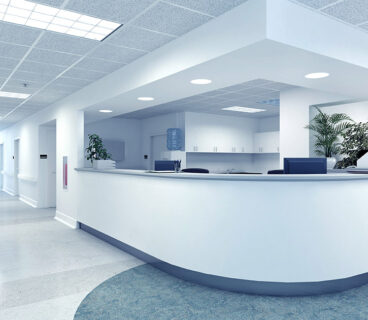




Digital Health Risk Assessments & Healthcare Resilience
Protecting the building systems that support patient care.
Hospitals depend on reliable mechanical and electrical infrastructure. Increasingly, that infrastructure also depends on digital controls, communications networks and connected monitoring systems. Understanding how these systems interact is essential to maintaining safe environments and continuity of care.
BSE3D helps healthcare organisations assess the resilience of their building services and the digital systems that control them. Our engineering-led assessments identify vulnerabilities, examine the consequences of failure and establish practical priorities for improvement.
Understanding the impact on clinical services
A resilient hospital needs more than standby equipment. Power, cooling, HTM-03-01ventilation, controls and communications must work together, with clear arrangements for responding to disruption and restoring essential services.
We work with estates teams, clinical stakeholders, IT departments and specialist cybersecurity advisers to understand these dependencies. Together, we establish which services are critical, how failures could affect care and where additional protection is needed.
Our assessments can cover:
- Building management systems and operational technology: Reviewing controls architecture, connected plant, sensors, alarms, remote access arrangements and interfaces with wider hospital networks.
- Critical power and cooling: Assessing the dependencies between electrical supplies, generators, UPS systems, cooling equipment and the controls supporting their operation.
- Ventilation and clinical environments: Reviewing control and monitoring arrangements for ventilation, temperature and pressure regimes in operating theatres, isolation facilities and other sensitive healthcare environments. Working with trusted suppliers of specialist ventilation systems designed to meet HTM-03-01 guidance for specialised ventilation in healthcare premises.
- Single points of failure: Identifying shared controllers, networks, power supplies or communications routes whose failure could affect multiple services or departments.
- Failure response and recovery: Reviewing local control, fallback operation, alarm escalation, configuration backups and restoration procedures. Supporting the development of agreed testing and recovery exercises.
- Obsolescence and future investment: Identifying unsupported equipment, software and integration constraints, with a phased approach to replacement and improvement.
Practical recommendations for a working hospital
Our approach considers the realities of operating a live healthcare estate: ageing infrastructure, constrained budgets, maintenance access and the need to deliver improvements around clinical activity.
Depending on the agreed scope, deliverables include a system and dependency map, a prioritised risk register, an assessment of potential service disruption and a programme of recommended actions. Findings provide a clear basis for maintenance planning, capital investment and discussions between estates, IT and clinical leadership.
For UK projects, assessments are informed by relevant NHS healthcare engineering and resilience guidance, alongside applicable building-services and operational technology security guidance. Specialist cybersecurity assessment and testing can be coordinated with the organisation’s appointed advisers.
Engineering resilience into healthcare estates
BSE3D brings mechanical, electrical and controls engineering expertise to the relationship between digital systems and physical infrastructure. We help healthcare organisations make informed decisions that strengthen essential services, support patient safety and prepare their estates for future change.
Speak to BSE3D about assessing the digital and engineering resilience of your healthcare estate.
Talk to Our Expert Team
Our expert team of building services consultants are here to help. If you would like to learn more about the range of services we offer, please get in touch for an informal discussion about your needs and requirements.